A visual guide to the default mode network
Same brain. Different connections.
Memory, self-reflection, and imagination draw on a network of brain areas. Explore each area and see how its connections may shift under psilocybin.
TYPICAL · AT RESTA simplified picture of brain connections
Typical is a teaching reference, not an individual brain scan. Line patterns are schematic, not measured effect sizes.
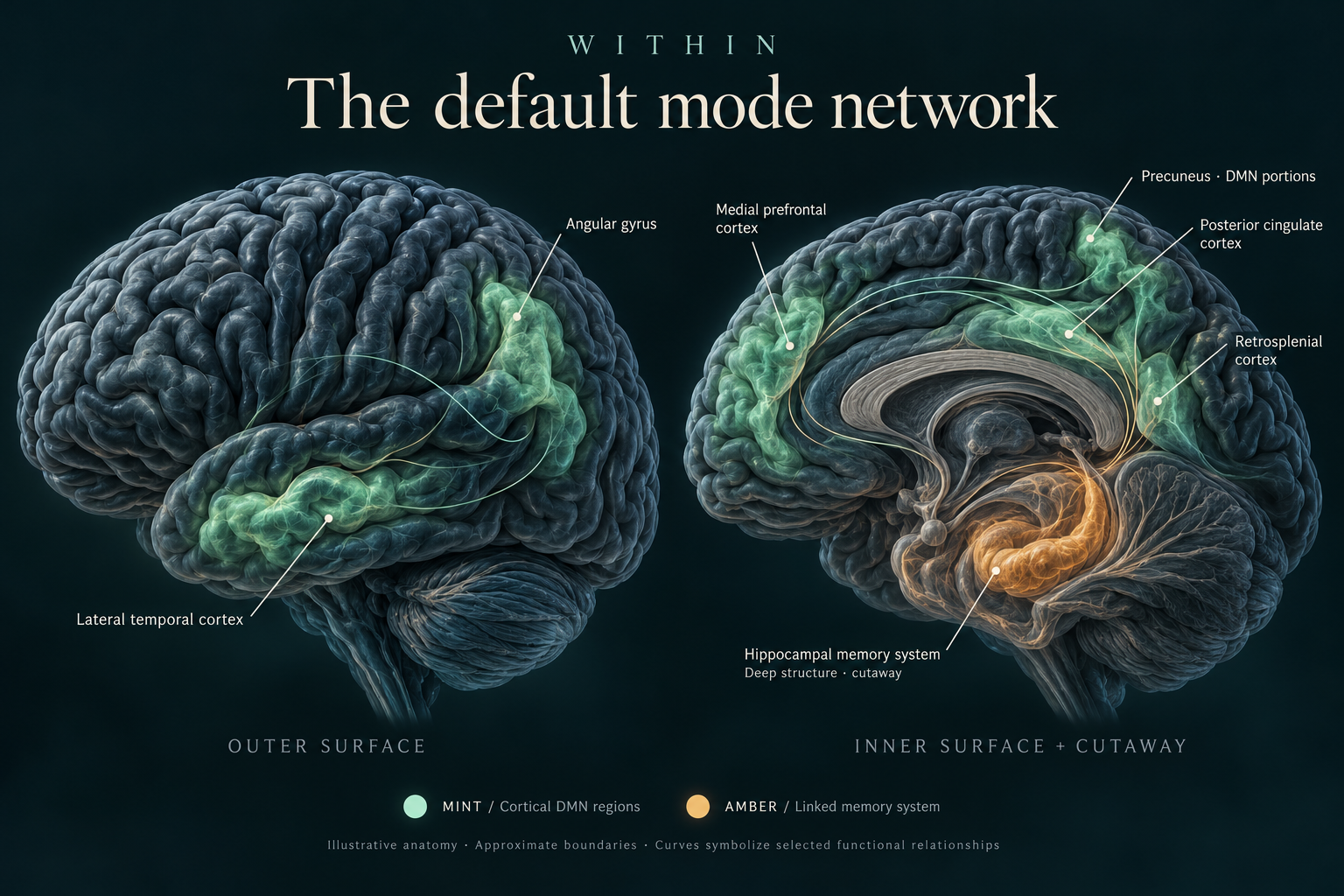
OUTER SURFACEINNER SURFACE + CUTAWAY
A WAY TO PICTURE IT
Think of the DMN like a sledding track in your mind. Each time you take the same route, the groove gets deeper. After a while, your sled just falls into it. Psilocybin is like a blanket of fresh snow, covering the groove enough to make another route easier to find.
Why might some changes last?
Psilocybin acts on serotonin receptors in the brain, including 5‑HT2A. It may also promote spinogenesis, the growth of tiny spines on brain cells that help them form connections. This could give the brain more room to reorganize, helping explain why some changes may last beyond the immediate effects.